
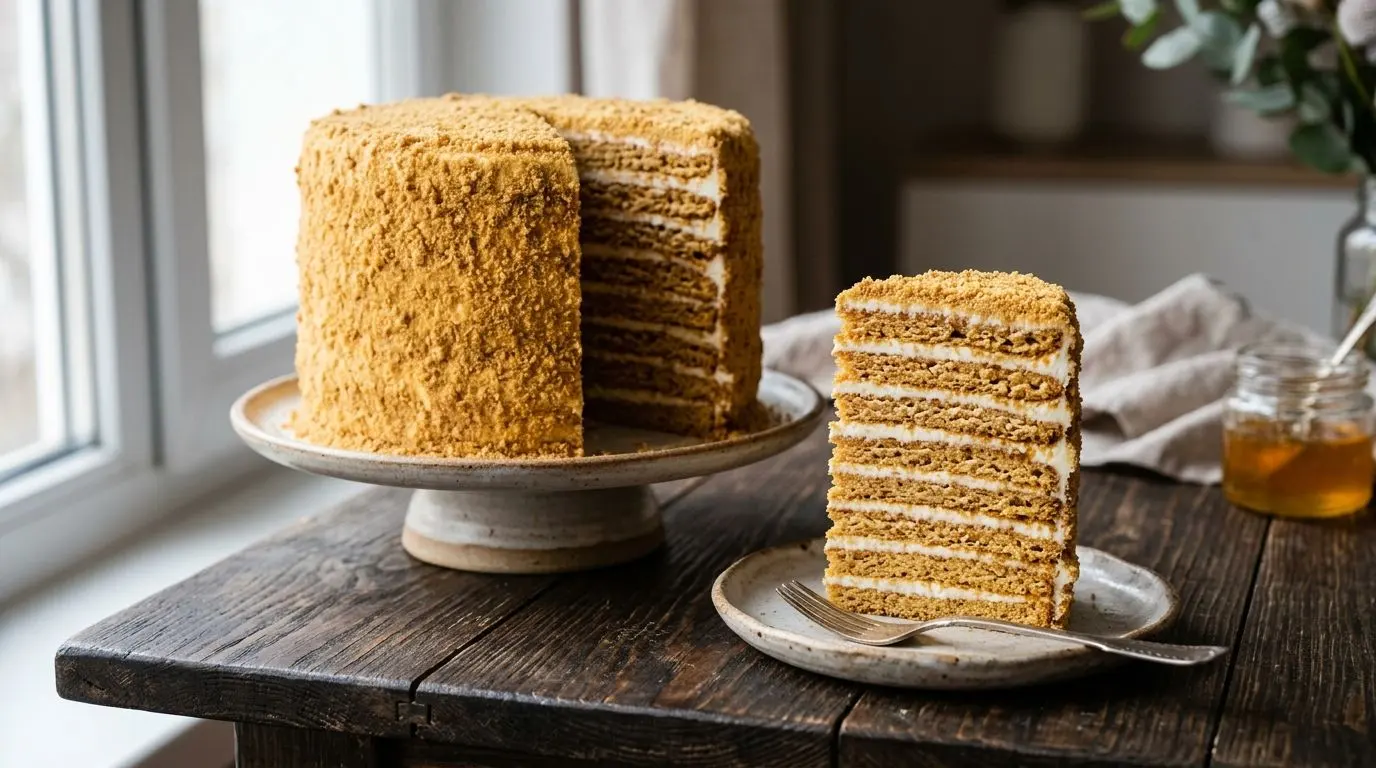
Medovik is a tall cake of eight or more wafer-thin honey layers stacked with sour cream frosting and covered in crumbs. Straight after assembly it is a pile of biscuits; after a night in the fridge the layers drink the cream and the cake cuts like a soft, dense sponge.
It is the honey cake in every Ukrainian café and at most family birthdays. Its older cousin, medivnyk, is a single spiced loaf; the two are often confused, and both are worth making.
Medovik and medivnyk
Medivnyk is home baking: one dark, spiced honey loaf, baked once, that keeps for a week. Medovik is a project: a honey dough cooked over steam, rolled into thin rounds, baked one at a time in a few minutes each, then stacked and left overnight.
Both start the same way, with honey and baking soda heated together until they foam and darken, which gives the cake its caramel colour and its taste.
The dough is cooked over steam
Honey, butter and sugar are melted together in a bowl over simmering water; the soda goes in and the mixture rises into an amber foam. The eggs are whisked in off the heat, and then the flour, until the dough is soft, a little sticky and still warm.
Warm dough rolls easily and cold dough cracks, so divide it into eight while it is warm and keep the pieces covered. Roll each one straight onto baking paper, as thin as you dare, and bake it on the paper.
The cream and the night
The classic frosting is sour cream sweetened with sugar. On its own, North American sour cream is thicker than Ukrainian smetana and makes a heavy cake, so this recipe lightens it with whipped cream. Condensed milk beaten with butter is the other school, sweeter and firmer.
The rest matters most. Twelve hours in the fridge is the difference between a stack of crisp layers and medovik.