When Is Ukrainian Christmas? The Dates, Malanka and the Whole Winter Season
The UAFest kitchen team
October 2026 · 8 min read
Ukrainian Christmas is on December 25 for most Ukrainians today, and the family meal that matters most, the Holy Supper, is on the evening of December 24. In 2026 that is Thursday evening, with Christmas Day on Friday.
Until 2023 Ukrainians kept Christmas on January 7, and many Ukrainian Canadian families and parishes still do. So the honest answer for Canada is: December 25 in most of Ukraine and in a growing number of Canadian churches, January 7 in others, and both in quite a few kitchens.
The difference is the calendar. For centuries the Ukrainian churches kept their fixed feasts by the Julian calendar, which now runs thirteen days behind the one on the wall, so December 25 by the old reckoning fell on January 7.
In 2023 the Orthodox Church of Ukraine and the Ukrainian Greek Catholic Church moved their fixed feasts to the Revised Julian calendar from 1 September, and Ukraine made December 25 the official Christmas holiday the same summer. Easter stayed where it was: it is still counted the old way, which is why Ukrainian Easter usually falls later than the Western one.
Ukrainian churches in Canada decide for themselves, parish by parish. If the date matters for your plans, the parish bulletin is the place to look.
Christmas is the middle of a season that runs from early December to the third week of January. Here it is on both calendars, with the 2026–27 weekdays:
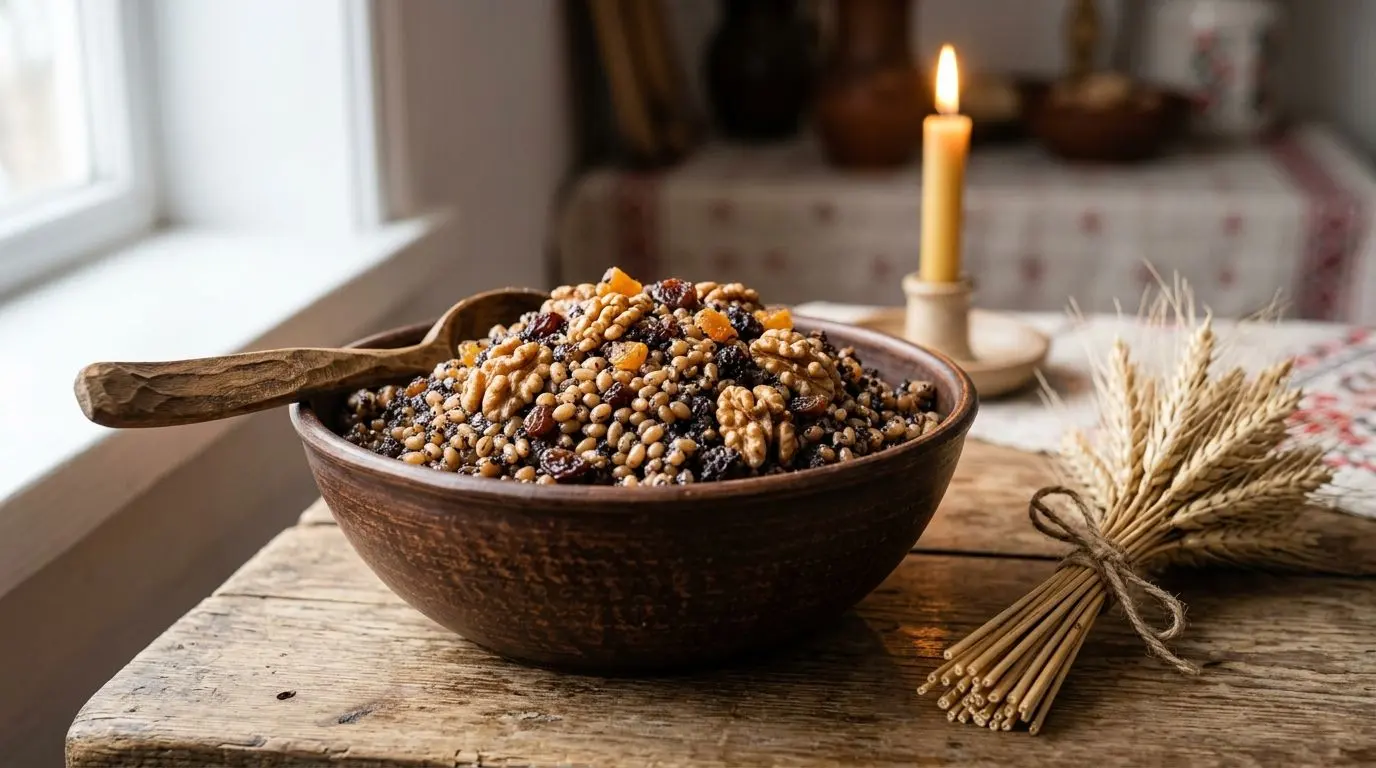
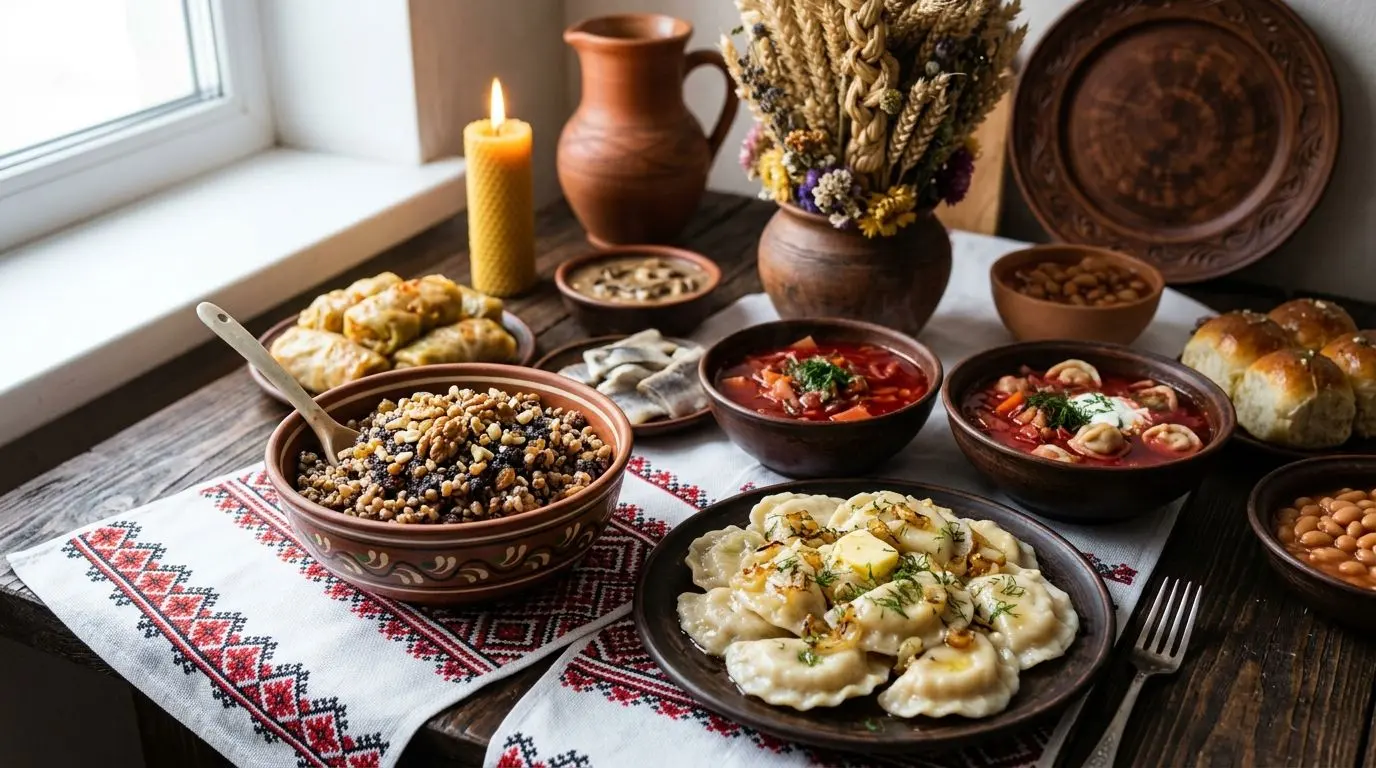
The Holy Supper starts when the first star comes out. There are twelve meatless dishes on the table, and kutia, boiled wheat with poppy seed and honey, is always first. A didukh, a sheaf of wheat, stands in the corner; a little hay goes under the tablecloth; one place is laid for those who cannot be there.
The twelve dishes, what each one is and why there is hay under the cloth have a guide of their own.
After supper the carolling begins. Koliadky are Ukrainian Christmas carols, some of them older than Christianity in Ukraine. Groups go from house to house with a bright star on a pole, sing at the door and are fed and paid in sweets and coins at each stop; in Canada, church choirs and youth groups do the same round of parishioners' homes.
The best-known Ukrainian winter song belongs to New Year. Shchedryk, arranged by Mykola Leontovych, became Carol of the Bells after the Ukrainian National Chorus sang it in North America in 1922.
Malanka is the evening before St Basil's Day, the Ukrainian New Year's Eve: 31 December on the new calendar, 13 January on the old one. It is also called Shchedryi Vechir, the generous evening, and the table is generous to match. The fast is over, so meat and sweets come back, together with a second, richer kutia.
In the villages Malanka is a masked procession: a young man dressed as Malanka, a goat, a bear, a fortune-teller, a soldier, going house to house with shchedrivky, the New Year's songs, and a lot of noise. The next morning boys go round sowing grain into the houses for luck.
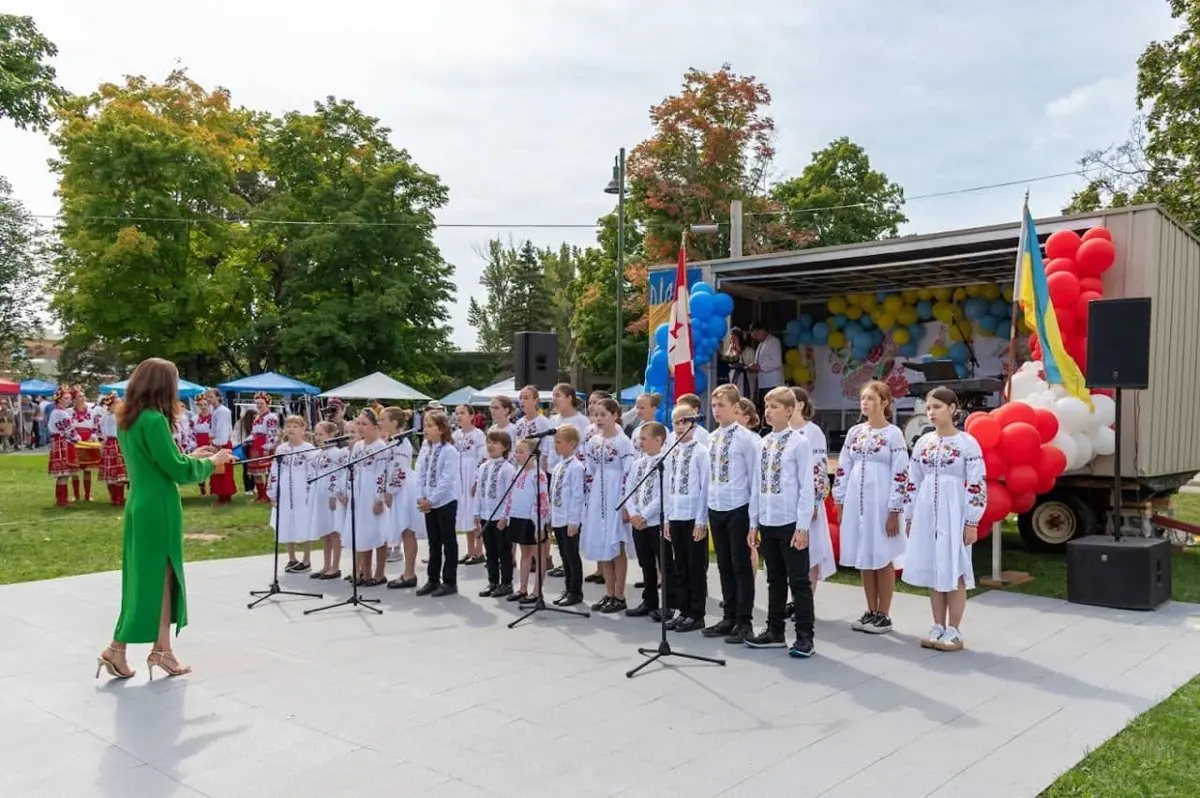
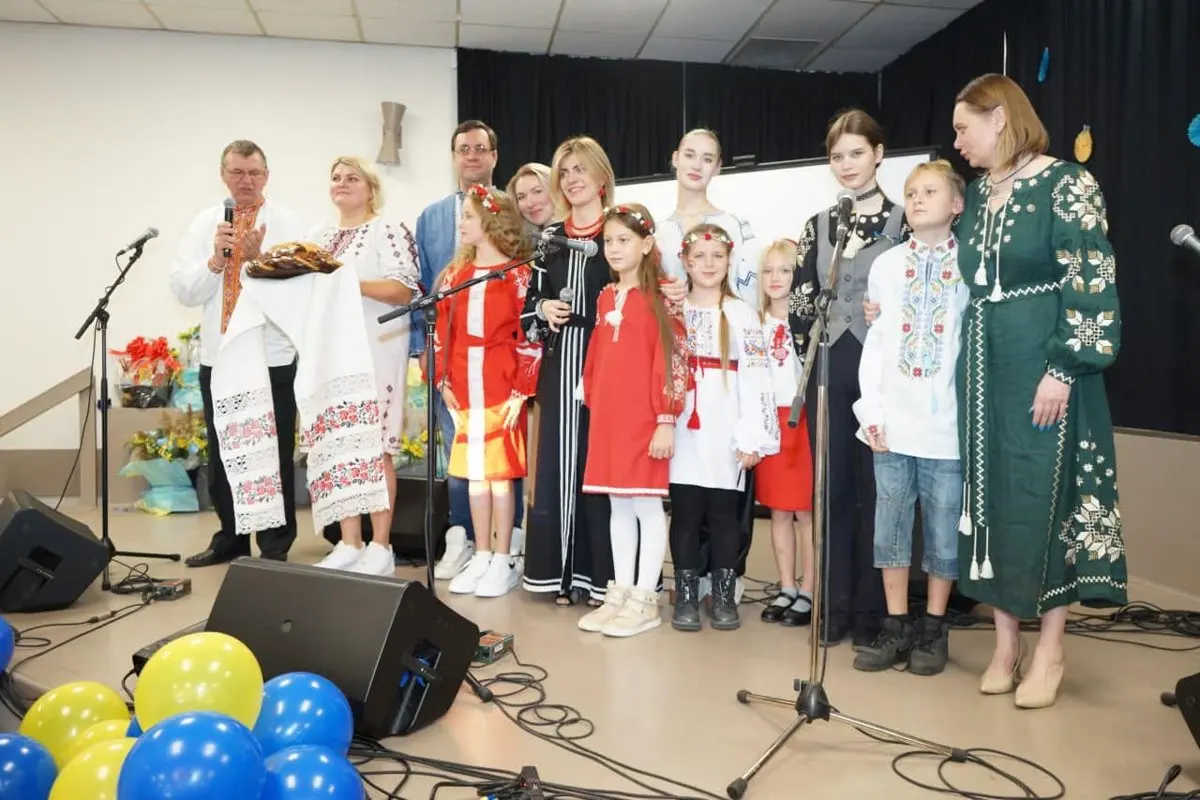
Ukrainian Canada turned Malanka into something of its own: a winter dinner-dance in the parish or community hall, usually on a January Saturday close to the old date, with a band, a late supper and dancing until long after midnight.
Vodokhreshche, the feast of the Theophany, is the blessing of the waters on 6 January (19 January on the old calendar). Water is blessed in church or at a river, families take it home in bottles, and in Ukraine the brave go into a cross cut in the ice. The evening before is the last of the three kutia suppers, the lean one, and after it the Christmas season is over.
Friday, 25 December 2026 for churches and families on the new calendar, with the Holy Supper on Thursday evening, 24 December. Those who keep the old calendar celebrate on Thursday, 7 January 2027, with the Holy Supper on 6 January.
In 2023 the Orthodox Church of Ukraine and the Ukrainian Greek Catholic Church moved their fixed feasts to the Revised Julian calendar, and Ukraine made December 25 its official Christmas holiday. Easter is still calculated by the old calendar.
For most Ukrainians the two now fall on different days. Churches that kept the Julian calendar, among them some Orthodox churches in Ukraine and abroad, still celebrate on January 7; the main Ukrainian churches now celebrate on December 25.
“Khrystos rodyvsia!” (Christ is born!), and the answer is “Slavimo Yoho!” (Let us glorify Him!). It replaces “hello” for the whole Christmas season.
Ukrainian New Year's Eve, the evening before St Basil's Day: December 31 on the new calendar, January 13 on the old one. In Ukraine it is a masked carolling procession; in Canada it is usually a January dinner-dance in a Ukrainian hall.
Recipes, festival news and vendor calls — a few emails a year, no more.
By subscribing you consent to receive festival emails from the Ukrainian Community of Lanark County. Unsubscribe anytime.