Paska: The Ukrainian Easter Bread, and How to Bake It
The UAFest kitchen team
October 2026 · 8 min read
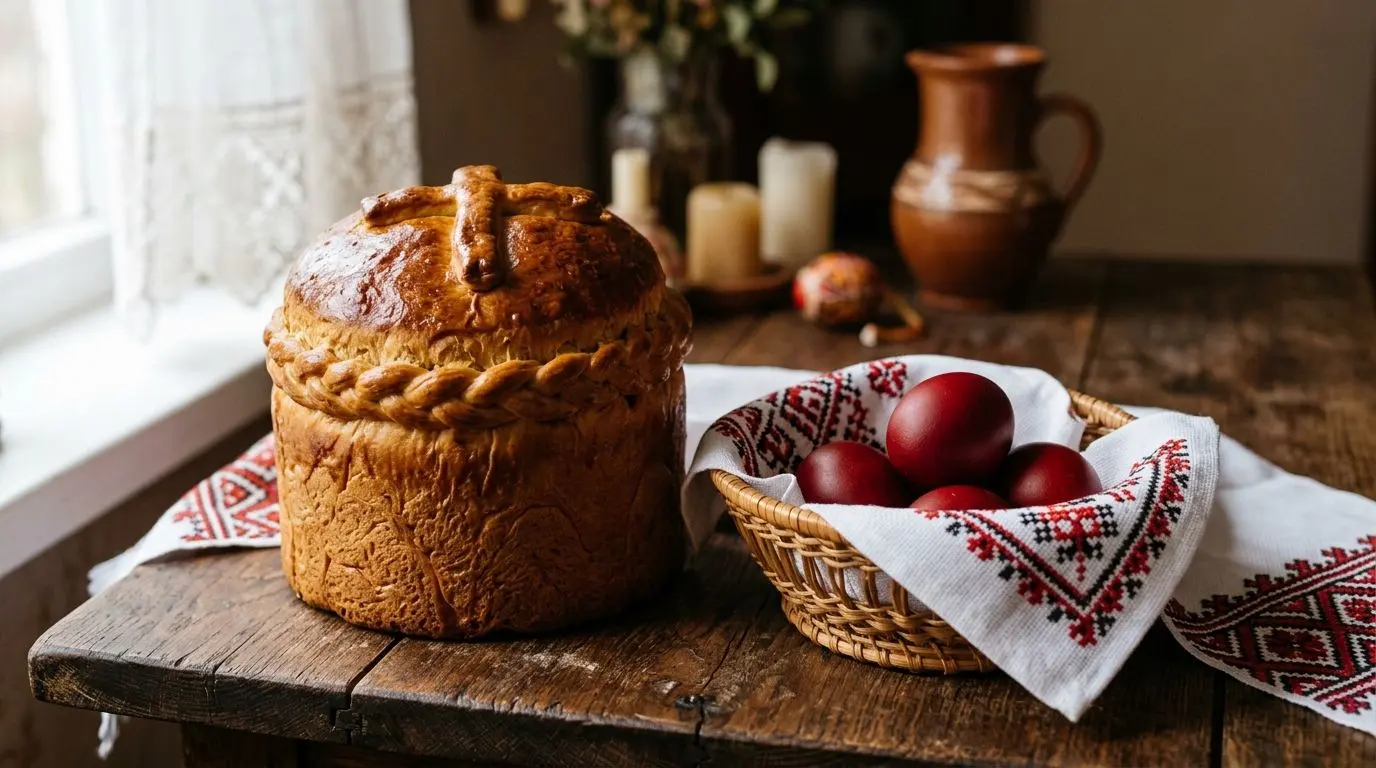
Paska is the Ukrainian Easter bread: a rich, golden yeast loaf made with eggs, butter, milk and sugar, baked in the last days of Lent, carried to church in the Easter basket and blessed before it is eaten on Easter morning.
Ukrainian Easter is counted by the old calendar, so it usually falls later than the Western one. In 2027 it is on Sunday, 2 May; Western Easter is on 28 March.
Three similar names cause most of the confusion. Paska is the Ukrainian bread. Kulich is the Russian Easter bread, tall and cylindrical, usually iced white. Paskha, in Russian, is a moulded dessert of sweetened curd cheese.
Ukrainian paska itself comes in two shapes. In much of Ukraine today it is tall and topped with a white glaze and sprinkles. In Western Ukraine and in most of Ukrainian Canada it is a round, high loaf decorated with dough: a cross, a braid around the rim, rosettes, birds or leaves, all brushed with egg until they shine.
On Holy Saturday or early on Easter Sunday the family takes a basket to church to be blessed. It is lined with an embroidered cloth, a rushnyk or a basket cover stitched for the purpose, and it carries the food of the Easter breakfast:
Paska is a rich dough, and rich doughs are slow. The sugar, yolks and butter hold the yeast back, so the first rise can take two hours or more; a warm kitchen and patience do more than extra yeast. Knead until the dough is smooth and pulls away from the bowl, even if it stays slightly sticky.
The dough decorations go on after the loaf is shaped, attached with a little water or egg wash. If they brown before the bread is done, cover the top loosely with foil; a skewer pushed into the centre should come out clean.
A rich, golden yeast bread with eggs, butter and lemon, decorated with a braided dough cross.
Sunday, 2 May 2027. Ukrainian churches still calculate Easter by the Julian calendar, so it usually falls later than Western Easter, which in 2027 is on 28 March.
Paska is the Ukrainian Easter bread, often round and decorated with dough braids and a cross. Kulich is the Russian Easter bread, tall and cylindrical with white icing. Paskha, confusingly, is a Russian curd-cheese dessert.
Paska, pysanky and dyed eggs, kovbasa or ham, butter, fresh cheese, salt, horseradish and a candle, all under an embroidered cloth. The basket is blessed in church on Holy Saturday or Easter morning.
Usually the dough was too cold or not given enough time. Rich dough rises slowly; let it double fully before shaping, and keep every ingredient at room temperature.
Recipes, festival news and vendor calls — a few emails a year, no more.
By subscribing you consent to receive festival emails from the Ukrainian Community of Lanark County. Unsubscribe anytime.