Home/Guides/Ukrainian Culture
← All guides

St Andrew's Eve: Kalyta, Fortune-Telling and the Last Party Before Christmas

The UAFest kitchen team
November 10, 2026 · 7 min read
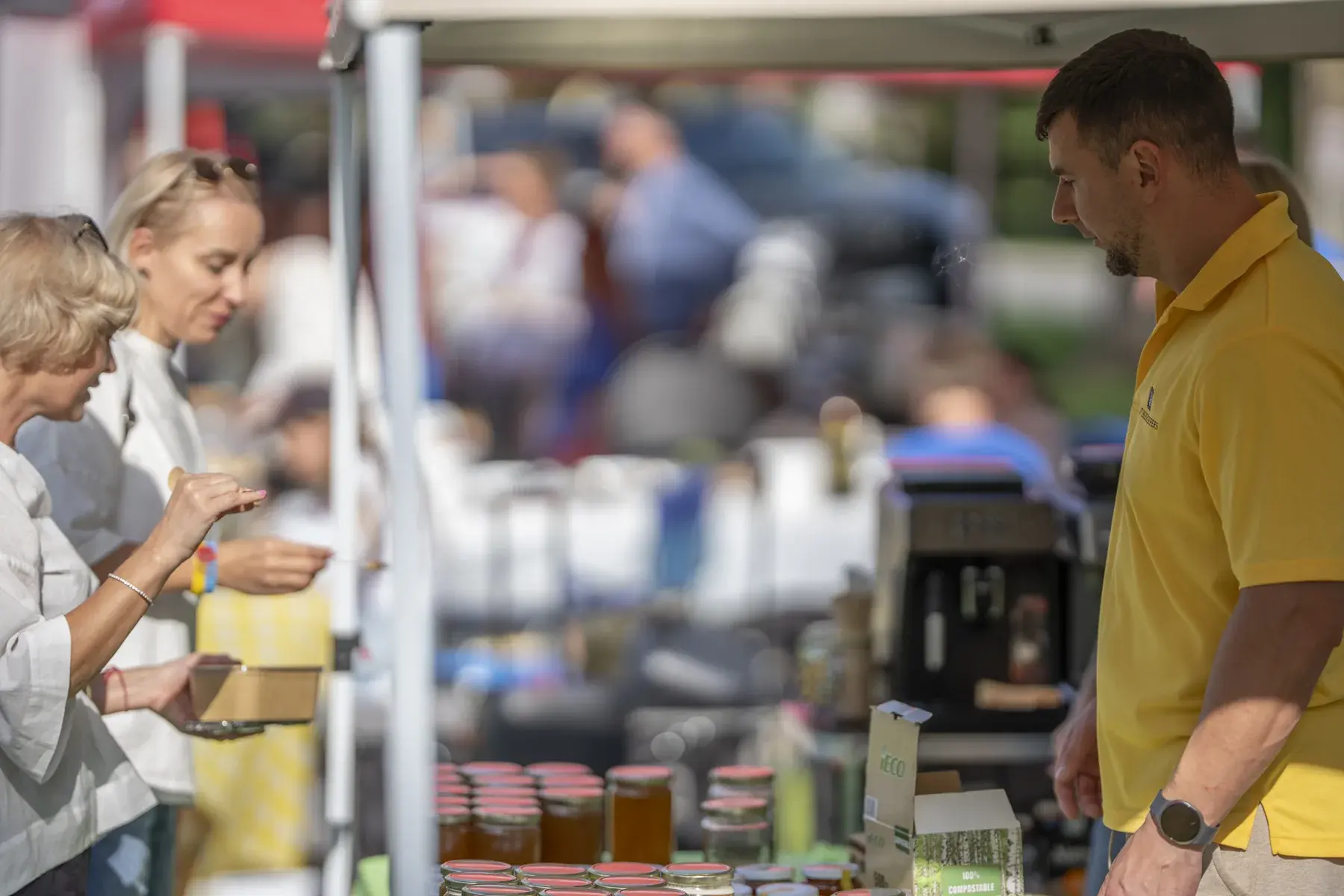
Visitors taste honey from a spoon at a honey stall with rows of jars, served by a vendor in a yellow polo, at UAFest 2026 in Carleton Place
Honey at a vendor stall, UAFest 2026, Carleton Place — the heart of a kalyta
Honey, bread and Ukrainian sweets are on the vendor tables at the festival every September.Join the UAFest 2027 waiting list

St Andrew's Eve, Andriivski vechornytsi in Ukrainian, is the evening of 29 November for most Ukrainians since the church calendar change of 2023, and the evening of 12 December for families and parishes that keep the old date. In 2026 the new-calendar evening is a Sunday, and St Andrew's Day itself is Monday, 30 November.

It is the young people's night of the Ukrainian winter: a party with a big round honey bread called kalyta hanging from the ceiling, games of fortune-telling about who will marry whom, and plenty of laughter. It is the last big evening of fun before Christmas.

Who St Andrew is, and why the date moved

St Andrew the First-Called was the first of the apostles to follow Christ. The old Kyivan chronicle tells that he travelled up the Dnipro, blessed the hills where Kyiv now stands, set up a cross there and foretold a great city. St Andrew's Church in Kyiv stands on the hill where, by that story, the cross was raised.

For centuries his feast was kept on 30 November by the Julian calendar, which today falls on 13 December. When the Orthodox Church of Ukraine and the Ukrainian Greek Catholic Church moved their fixed feasts to the Revised Julian calendar on 1 September 2023, St Andrew's Day moved to 30 November on the wall calendar, and the eve with it to the 29th.

The evening falls inside Pylypivka, the forty-day fast before Christmas, which now begins on 15 November. Weddings and loud parties stopped for the fast, but St Andrew's evening was the exception the village allowed.

Biting the kalyta

The kalyta is a large, flat round loaf of wheat bread sweetened with honey. It is hung from the ceiling beam on a red ribbon or an embroidered towel, high enough that you have to jump for it. Making it was the girls' job, and the honey glaze on top was the point of pride.

Then the game. One player keeps the kalyta, another plays the Pysar, the clerk, with a brush dipped in soot or charcoal. Each boy in turn rides up to the kalyta on a fire poker as if it were a horse, announces himself, and tries to bite the loaf without his hands and without laughing. The Pysar does everything to make him laugh. Laugh, and he paints a soot moustache on your face; bite cleanly, and you are promised a good year and a wedding. At the end the kalyta is taken down and shared by everyone in the room.

The names and details change from region to region, and so does the order of the evening. The core is the same everywhere: a honey bread, a jump, a straight face, and a lot of laughing.

Fortune-telling: the boot, the fence and the wax

St Andrew's Eve was the one night a year when girls were meant to learn their fate, and most of the evening's customs are about one question: who will I marry, and when? Nobody needs to believe in them to enjoy them, and today they are played as party games.

  • The boot over the gate — a girl throws her boot over the gate; the way its toe points is the direction her husband will come from.
  • Counting the fence — in the dark, a girl counts the stakes of a fence, saying "single, married"; the word that falls on the last stake is her answer.
  • Pouring wax — melted wax or candle ends are poured into a bowl of cold water, and the shape that sets is read: a ring for a wedding, a church for a marriage, a cart for a journey.
  • Whose varenyk the dog eats — each girl puts a varenyk or a little bun in a row on the floor and a dog is let in; the owner of the first one it eats will marry first.
  • Listening at windows — a girl goes out and listens at a neighbour's window; the first name she hears spoken inside is her future husband's.

St Andrew's evening in Canada

In Ukrainian Canada the vechornytsi moved from the village house to the parish hall, the Ukrainian school and the youth club. A St Andrew's evening there usually means a kalyta on a ribbon, the soot-moustache game for the children, a few of the fortune-telling games, songs and supper. Some communities hold it on the new date at the end of November, others in mid-December by the old calendar.

If you want to find one near you, the bulletin of your local Ukrainian parish, school or community centre is the place to look. If not, it is one of the easiest Ukrainian traditions to start at home: one kalyta, a ribbon, a few friends and a fire poker, or a broom.
Recipe

Kalyta (Ukrainian Honey Bread for St Andrew's Eve)

A large, flat round loaf of soft yeast bread sweetened and glazed with honey, made to hang on a ribbon for the St Andrew's Eve game.

Prep
2 hours 20 minutes
Cook
35 minutes
Total
2 hours 55 minutes
Makes
1 large round loaf, about 28 cm across
Calories
≈ 250 kcalper slice

Calories are an estimate from the ingredient list. Optional ingredients and whatever is added at the table are left out.

Ingredients

Dough
  • 500 g (about 4 cups) all-purpose flour, plus more for the board
  • 200 ml warm milk
  • 7 g (1 packet) instant dry yeast
  • 100 g liquid honey
  • 2 eggs, at room temperature
  • 60 g butter, melted and cooled
  • 1/2 tsp salt
Glaze
  • 1 egg yolk beaten with 1 tbsp milk
  • 2 tbsp honey, warmed
To hang
  • About 1.5 m of red ribbon, 2–3 cm wide

Method

  1. 1Start the doughStir the yeast and a spoonful of the honey into the warm milk and leave it for 10 minutes, until it foams.
  2. 2KneadAdd the rest of the honey, the eggs, melted butter and salt, then the flour. Knead for 8 to 10 minutes into a soft, smooth dough that no longer sticks to your hands.
  3. 3First riseCover the bowl and leave the dough in a warm place for about 1 hour, until it has doubled.
  4. 4ShapePress the dough into a flat round about 2 cm thick on a baking sheet lined with parchment. With a floured glass, cut a hole about 5 cm wide in the centre for the ribbon and set the cut-out piece beside it to bake as a bun.
  5. 5Second rise and glazeCover and leave for 40 minutes. Brush the top with the beaten yolk; decorate with dough braids or a dough cross if you like, and brush those too.
  6. 6BakeBake at 180°C (350°F) for 30 to 35 minutes, until deep golden; if the top darkens too fast, cover it loosely with foil.
  7. 7Honey and hangBrush the hot kalyta with the warmed honey and let it cool completely on a rack. Thread the ribbon through the hole and hang it so the bottom of the loaf is just above head height.

Notes from the kitchen

  • For a lean kalyta during the Christmas fast, use water instead of milk, 4 tbsp sunflower oil instead of butter and eggs, and glaze with honey only.
  • Bake it the day before: a day-old kalyta is firmer and survives being bitten and swung on its ribbon.
  • Without a hole, tie the ribbon around the loaf like a parcel, crossing it underneath.
Honey, bread and Ukrainian sweets are on the vendor tables at the festival every September.
UAFest 2026 took place on Sunday, September 13 · Riverside Park, Carleton Place
Join the UAFest 2027 waiting list
Questions

What people ask

Sunday evening, 29 November 2026, for churches and families on the new calendar, with St Andrew's Day on Monday, 30 November. Those who keep the old calendar mark it on Saturday evening, 12 December, with the feast on 13 December.

A large, flat round loaf of wheat bread sweetened with honey. On St Andrew's Eve it hangs from the ceiling on a red ribbon, and the players try to bite it without hands and without laughing.

St Andrew's evening gatherings. Vechornytsi were the evening get-togethers of young people in a Ukrainian village, and the one on the eve of St Andrew's Day was the most famous of the year.

Throwing a boot over the gate to see the direction the groom will come from, counting fence stakes in the dark, pouring melted wax into water and reading the shape, letting a dog choose between the girls' varenyky, and listening at a neighbour's window for a name.

No. St Andrew's Eve is at the end of November (or mid-December on the old calendar), before Christmas. Malanka is Ukrainian New Year's Eve, on 31 December or 13 January, after it. Both have fortune-telling, but the kalyta belongs to St Andrew.

Newsletter

Get the next guide first

Recipes, festival news and vendor calls — a few emails a year, no more.

By subscribing you consent to receive festival emails from the Ukrainian Community of Lanark County. Unsubscribe anytime.
Join the 2027 list