Ukrainian Borscht, Made the Way It Is at Home
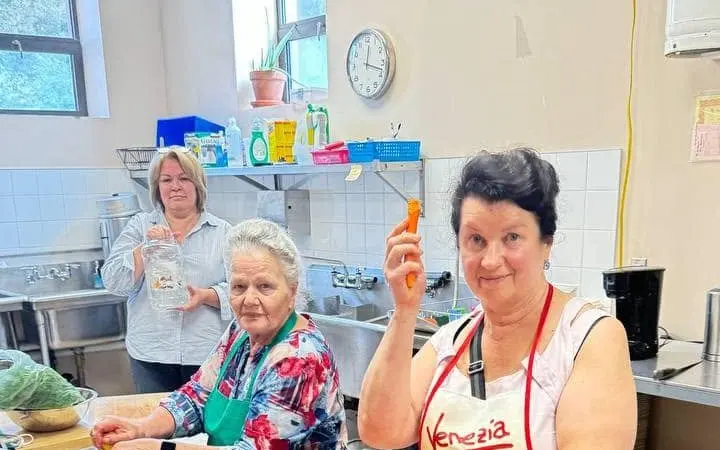
The UAFest kitchen team
August 2026 · 9 min read
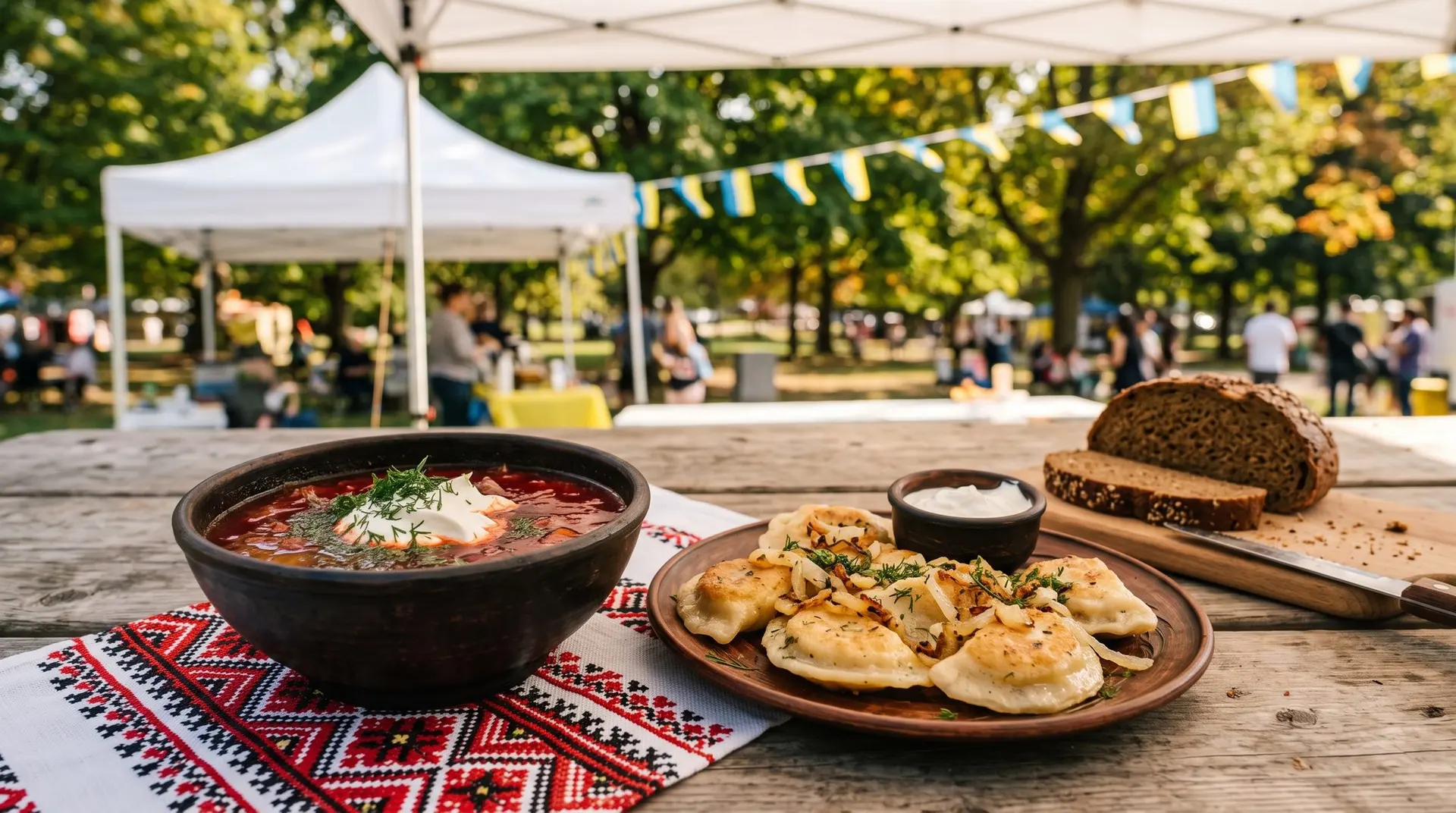
Borscht is the dish Ukrainians argue about most and agree on least. Every family cooks it slightly differently, and every one of them is convinced theirs is the correct version. What follows is the common ground: a beetroot and cabbage soup built on a real broth, soured so it stays deep red, and finished with garlic, dill and sour cream.
In 2022 UNESCO added Ukrainian borscht culture to its list of intangible heritage in need of urgent safeguarding. That listing is about the cooking itself — the growing, the fermenting, the passing of the pot from one generation to the next — which is a fair description of what happens in a festival kitchen every year.
Three things carry the dish: beets, cabbage and a sour element. The beets give sweetness and colour, the cabbage gives body, and the acid — lemon juice, vinegar, beet kvas or the brine from pickled tomatoes — keeps the red from turning brown as the pot simmers.
Beyond that the variations are regional and personal. Southern versions lean on tomatoes. Western ones can be meatless and thin, especially during fasting. Some cooks add beans, some add prunes, and in Poltava the pot may hold dumplings called halushky. The recipe below is the everyday version most Ukrainian homes in Canada cook.
Borscht rewards patience in a specific sequence. Broth first, and it should taste good on its own before a vegetable ever touches it. Potatoes and cabbage next, because they need the longest simmer. The beets go in near the end, cooked separately with the acid so they keep their colour.
The last five minutes are for garlic and dill, and then the pot rests. Borscht eaten straight off the stove tastes like its parts. Borscht eaten the next day tastes like borscht — this is the one point nearly every Ukrainian cook will agree on.
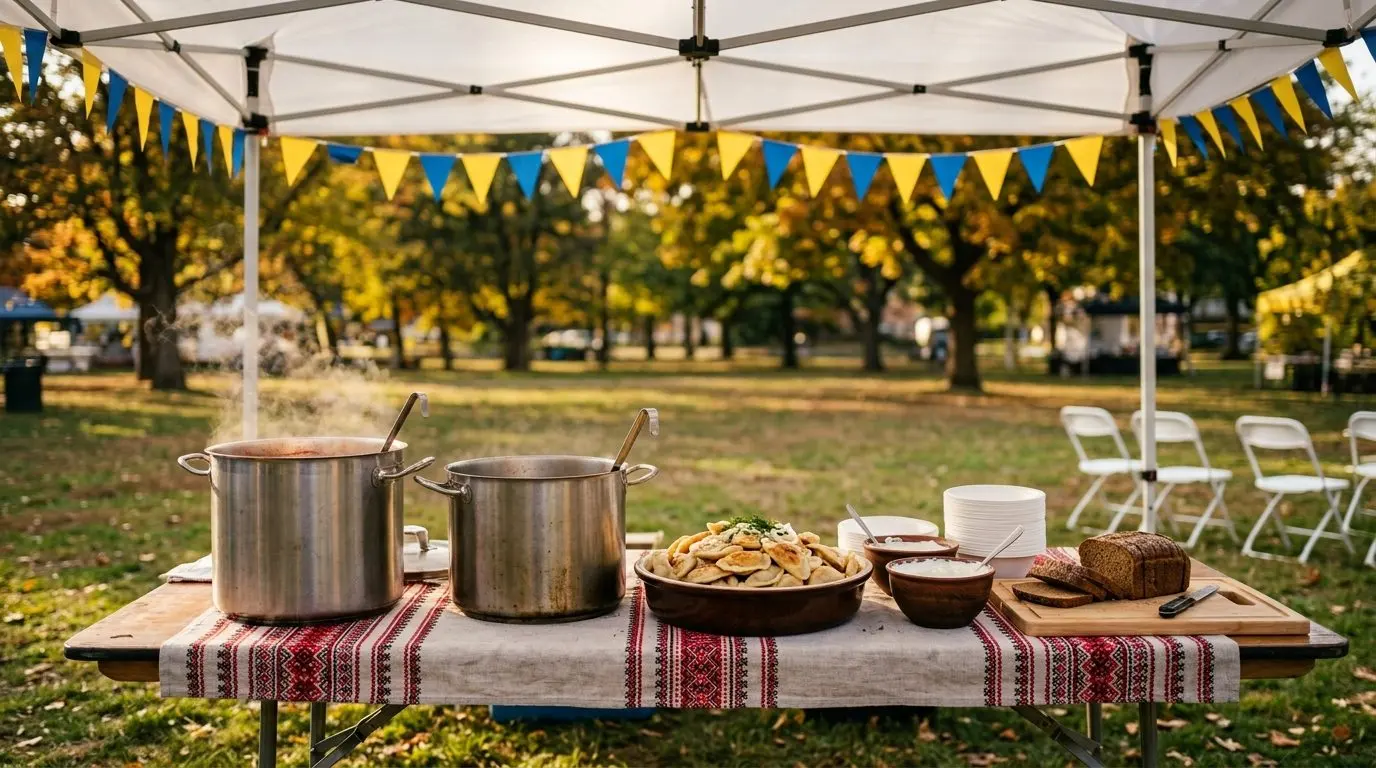
At UAFest the borscht is cooked in volume by the kitchen team and served through the food court alongside varenyky, cabbage rolls and grilled sausage. It comes with sour cream and a slice of bread, the way it is eaten at home, and on a September afternoon by the river it disappears faster than anything else on the menu.
Beet and cabbage soup on a beef broth, soured to hold its colour, finished with garlic, dill and sour cream.
Borscht is Ukrainian in origin, and in 2022 UNESCO inscribed the culture of Ukrainian borscht cooking on its list of intangible cultural heritage in need of urgent safeguarding. Versions of the soup are eaten across the region, and the dish travelled with people, as food does.
The beets were boiled in the pot without acid. Cook them separately with lemon juice or vinegar and add them near the end, and the soup stays red.
Yes. Ukrainian cooks make a lean version throughout the fasting calendar, built on mushroom or bean broth. Beans replace the meat for body, and the method is otherwise unchanged.
The beet-and-cabbage borscht here is served hot. There is a separate summer soup, kholodnyk, made with kefir and young beets, which is served cold.
The UAFest food court in Carleton Place served it on festival day — Sunday, September 13, 2026, at Riverside Park, about 45 minutes west of Ottawa. UAFest 2027 takes place in September 2027; the exact days and the venue go to the waiting list at uafest.ca/2027 first.
Recipes, festival news and vendor calls — a few emails a year, no more.
By subscribing you consent to receive festival emails from the Ukrainian Community of Lanark County. Unsubscribe anytime.