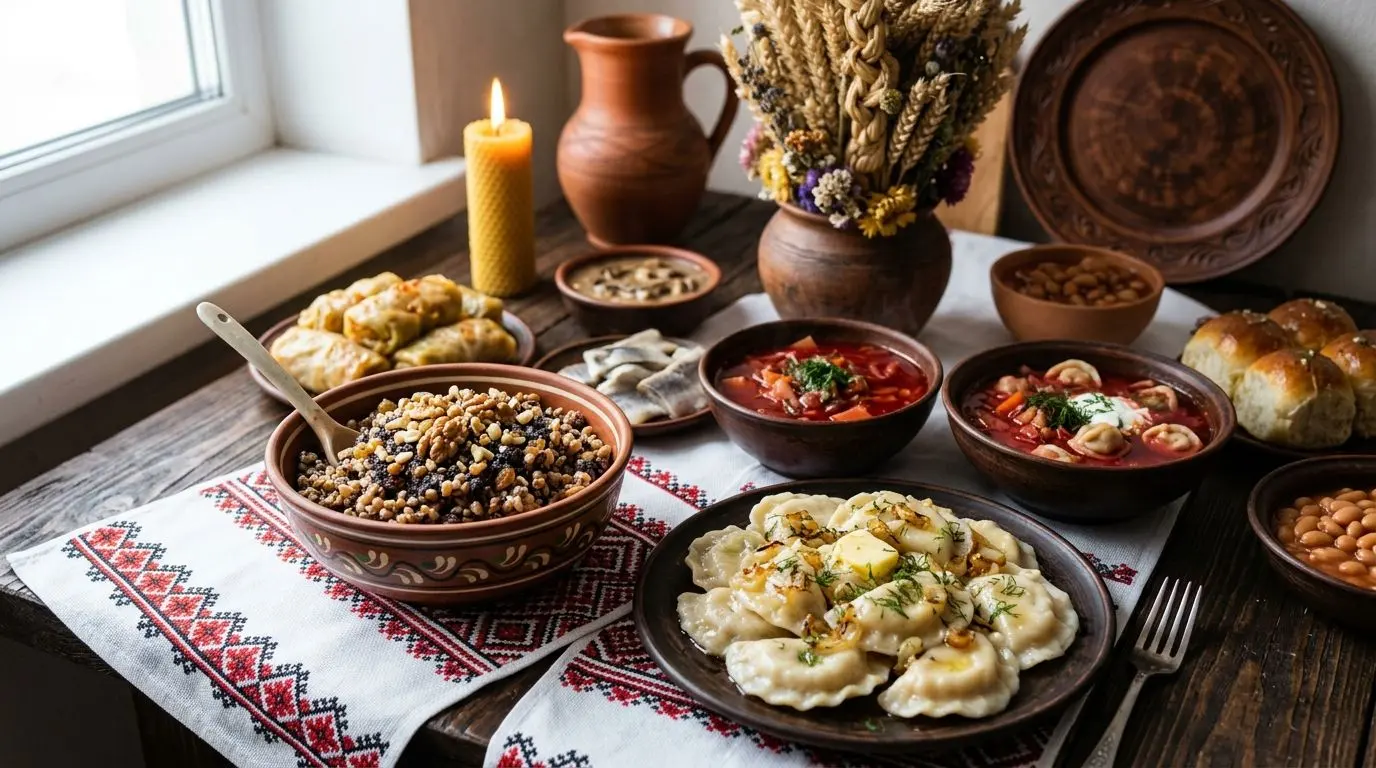
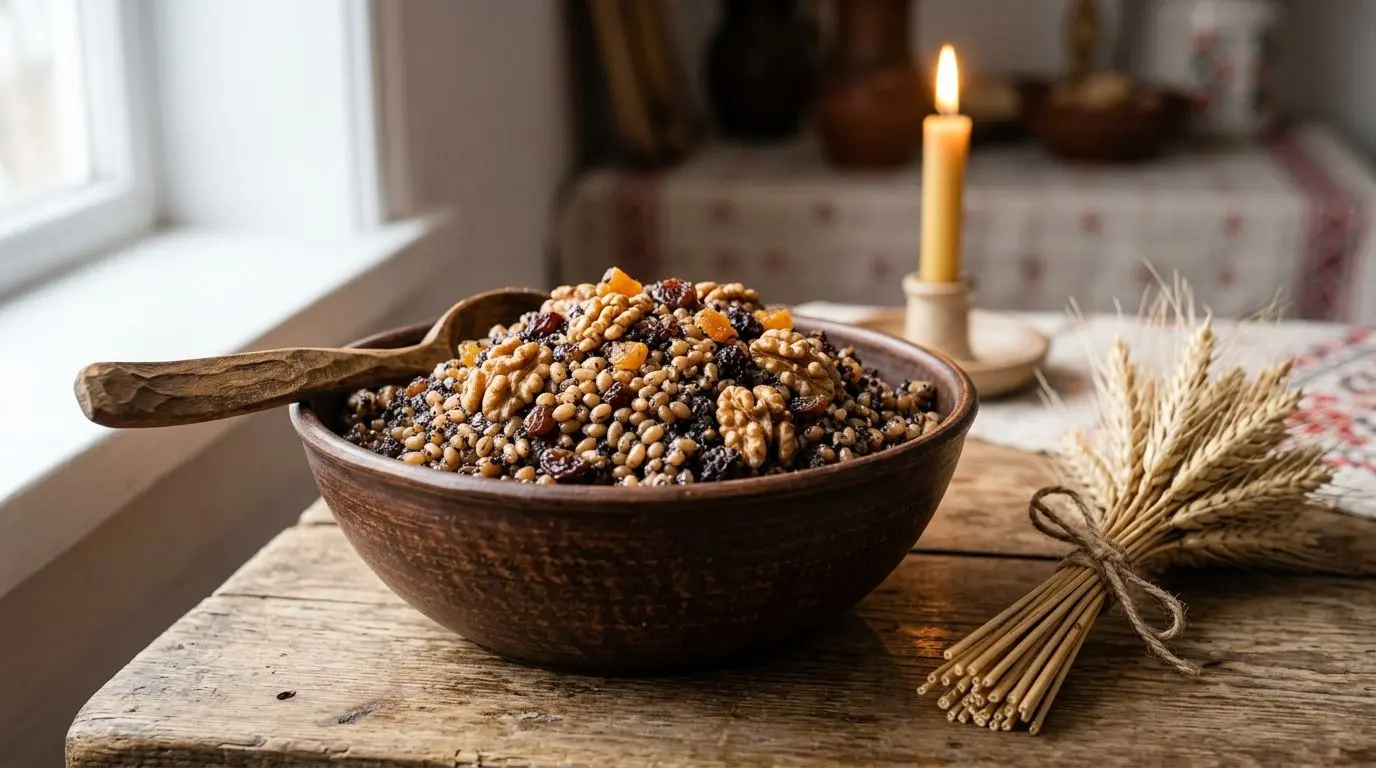
Kutia is boiled whole wheat mixed with ground poppy seed and honey, usually with walnuts and raisins. It is the first dish of the Ukrainian Christmas Eve supper, and in many families the head of the house lifts the first spoonful before anyone else touches the table.
It is one of the oldest dishes in the Ukrainian kitchen and one of the simplest: three ingredients that each mean something, and a pot of wheat that needs time more than skill.
What goes into kutia, and why
Wheat stands for life and the harvest, poppy seed for the ancestors and for sleep, honey for the sweetness hoped for in the year ahead. Walnuts, raisins and sometimes dried apricots are later and richer additions; a poor household made kutia with wheat, poppy seed and honey diluted in water, and it was still kutia.
The wheat goes in as whole berries; cracked wheat and bulgur turn to mush. Bulk stores and health-food shops in Canada sell them as wheat berries or soft white wheat. Some families use pearl barley instead, which cooks in half the time; rice kutia is the Western Ukrainian and city habit.
The poppy seed is the work
Poppy seed has to be broken open before it gives up its flavour. Scald it with boiling water, let it stand until it swells, drain it well, then grind it: in a makitra and makohon, the clay bowl and wooden pestle a grandmother would use, in a mortar, or in short bursts in a coffee grinder or food processor. It is ready when it turns pale grey and a little milky.
Unground poppy seed leaves the kutia sandy and almost tasteless. Ground, it turns the whole bowl the colour of wet slate and tastes nutty and faintly sweet.
Three kutias in one winter
Ukrainian tradition sets kutia on the table three times. The rich kutia on Christmas Eve is lean, with honey and poppy seed. The generous kutia on Malanka, the New Year's Eve, can be made with butter or cream, because the fast is over. The hungry kutia, on the eve of Vodokhreshche, is the plain one, and closes the season.