Sviata Vecheria: The Twelve Dishes of Ukrainian Christmas Eve
The UAFest kitchen team
August 2026 · 9 min read
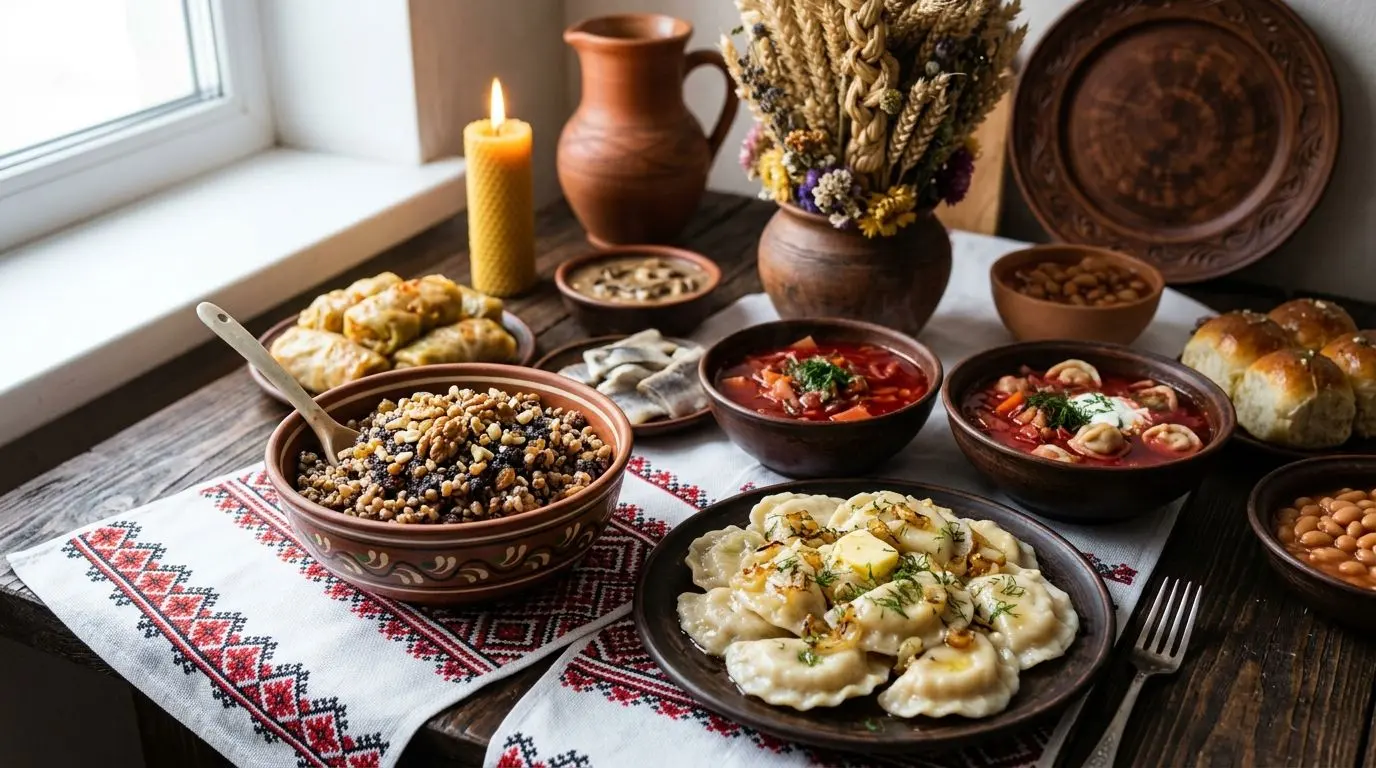
Sviata Vecheria — the Holy Supper — is the Ukrainian Christmas Eve meal. Twelve meatless dishes, one for each apostle, served when the first star appears in the sky. It is the most carefully kept meal of the Ukrainian year.
The table is set with things that mean something: a sheaf of wheat called didukh in the corner, a little hay under the tablecloth for the manger, and one extra place laid for family who cannot be there.
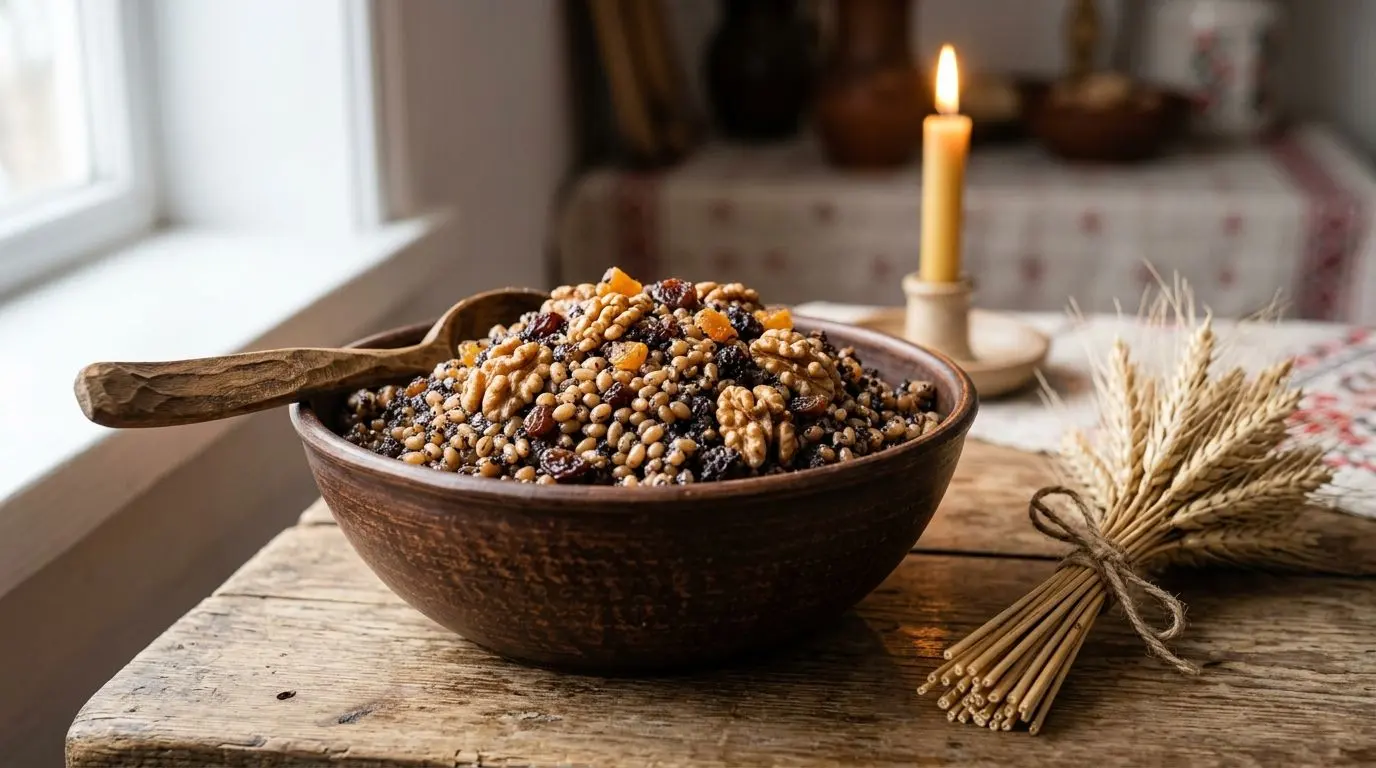
Kutia opens the supper: wheat berries boiled soft, mixed with poppy seed ground to a paste, honey, and often walnuts and raisins. The head of the household takes the first spoonful, and in some families throws a spoonful at the ceiling — the more grains that stick, the better the year ahead.
Wheat for life, poppy seed for the ancestors, honey for the sweetness that is hoped for. The dish is older than the holiday it belongs to.
The list varies by region and by family. Every dish is lean: no meat, no dairy, no eggs, which is what the fast requires.
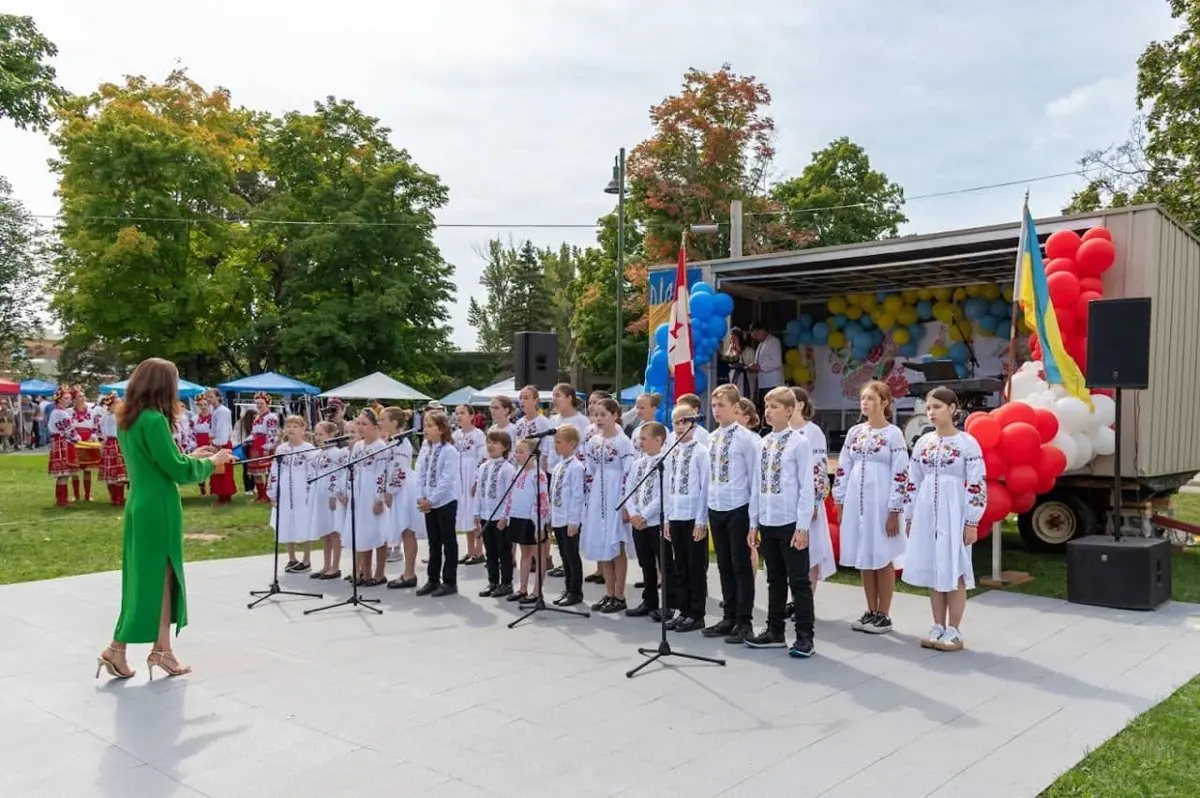
When the table is cleared, koliadky begin — Ukrainian Christmas carols, some of them pre-Christian in origin. Groups of carollers go house to house, often carrying a bright star on a pole, and are fed at every stop.
Shchedryk, the New Year's song written down by Mykola Leontovych in 1916, is the one the whole world knows. It travelled to America with the Ukrainian National Chorus in 1922 and became Carol of the Bells.
Ukrainian Christmas was long kept on January 7, following the Julian calendar. In 2023 the Orthodox Church of Ukraine moved to the Revised Julian calendar and Christmas to December 25, and most Ukrainian communities in Canada now keep the Holy Supper on December 24.
Some families keep both, which is a very Ukrainian solution to a calendar problem.
One for each of the twelve apostles. All twelve are meatless, because Christmas Eve falls at the end of the Nativity fast.
The first dish of the Holy Supper: boiled wheat berries with ground poppy seed, honey, and usually walnuts and raisins.
December 25 for most Ukrainians since the Orthodox Church of Ukraine adopted the Revised Julian calendar in 2023, with the Holy Supper on December 24. Some families continue to mark January 7 as well.
It stands for the manger. A sheaf of wheat, the didukh, stands in the corner of the room for the same kind of reason — it represents the ancestors and the harvest.
The melody is Shchedryk, arranged by Mykola Leontovych from a Ukrainian New Year's folk chant and published in 1916. English lyrics were written in the 1930s after the Ukrainian National Chorus toured North America.
Recipes, festival news and vendor calls — a few emails a year, no more.
By subscribing you consent to receive festival emails from the Ukrainian Community of Lanark County. Unsubscribe anytime.