Ukrainians in Canada: 135 Years of Settlement, Community and Festivals
The UAFest organising team
November 2026 · 8 min read
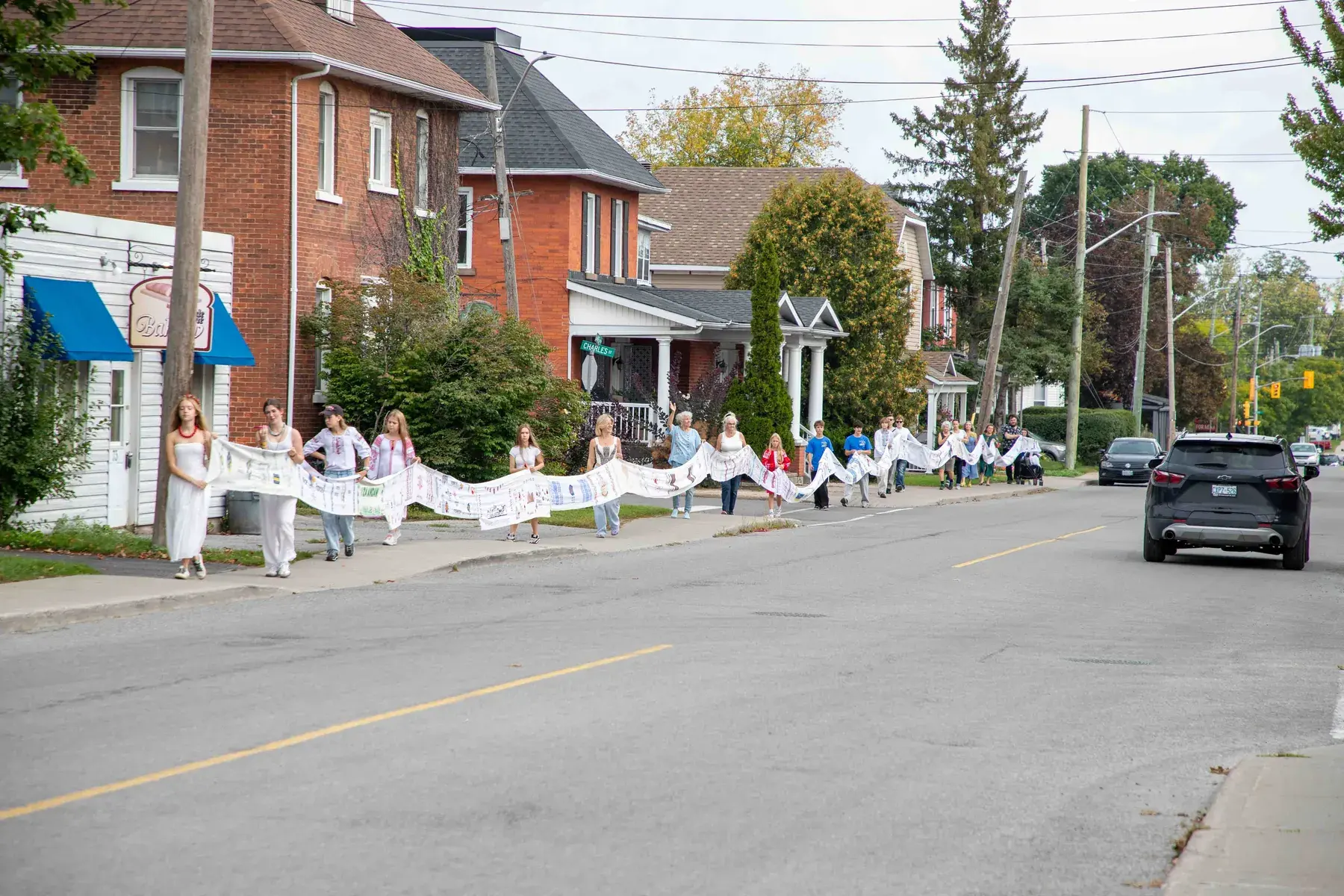
More than 1.2 million Canadians reported Ukrainian origin in the 2021 census, one of the largest Ukrainian communities outside Ukraine. Its story starts with two farmers from Galicia who came to look at Prairie land in 1891 and runs through four waves of immigration to the close to 300,000 people who arrived from Ukraine after 2022. This guide covers the history in short, where Ukrainian Canadians live, and where the community meets today.
In the 2021 census more than 1.2 million people in Canada reported Ukrainian ethnic or cultural origin, alone or together with other origins. Most of them are Canadian-born descendants of the early settlers; a smaller number speak Ukrainian at home.
On top of that, close to 300,000 people arrived from Ukraine between March 2022 and the end of March 2024 under the Canada–Ukraine Authorization for Emergency Travel, CUAET. Many of them have settled in Ontario and Alberta, and they changed the community in a few years: new Saturday schools, new choirs, new businesses, and festivals like UAFest that began in this period.
Historians usually describe Ukrainian immigration to Canada as four waves, with the arrivals after 2022 as a fifth.
In 1891 Ivan Pylypiw and Wasyl Eleniak came from the village of Nebyliv to see the land Canada was offering to settlers. Families followed them by the thousands, and the Prairie landscape still shows it: onion-domed churches in the fields, the giant pysanka in Vegreville, Ukrainian bilingual school programmes, and the oldest festivals in the country. The settlers' world is preserved at the Ukrainian Cultural Heritage Village east of Edmonton.
The history has a dark chapter. During the First World War thousands of Ukrainians who had come from Austria-Hungary were classed as enemy aliens and held in internment camps across Canada. The internment is remembered today with plaques and a federal recognition fund.
The biggest communities are in Ontario, Alberta, British Columbia, Manitoba and Saskatchewan. Toronto, Edmonton, Winnipeg, Calgary, Vancouver and Ottawa have the largest Ukrainian parishes and organisations, and most of them hold a Ukrainian festival in summer or early fall.
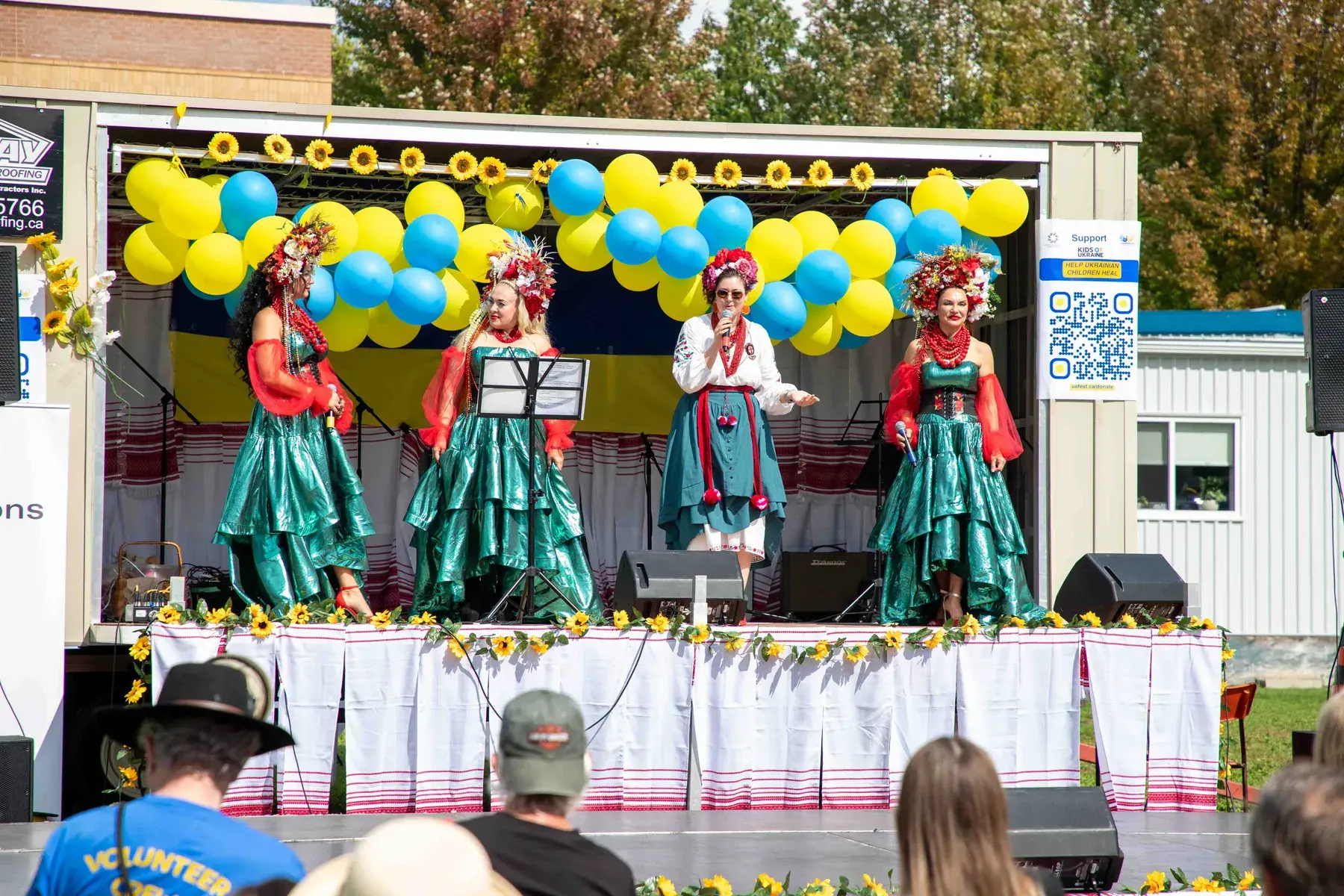
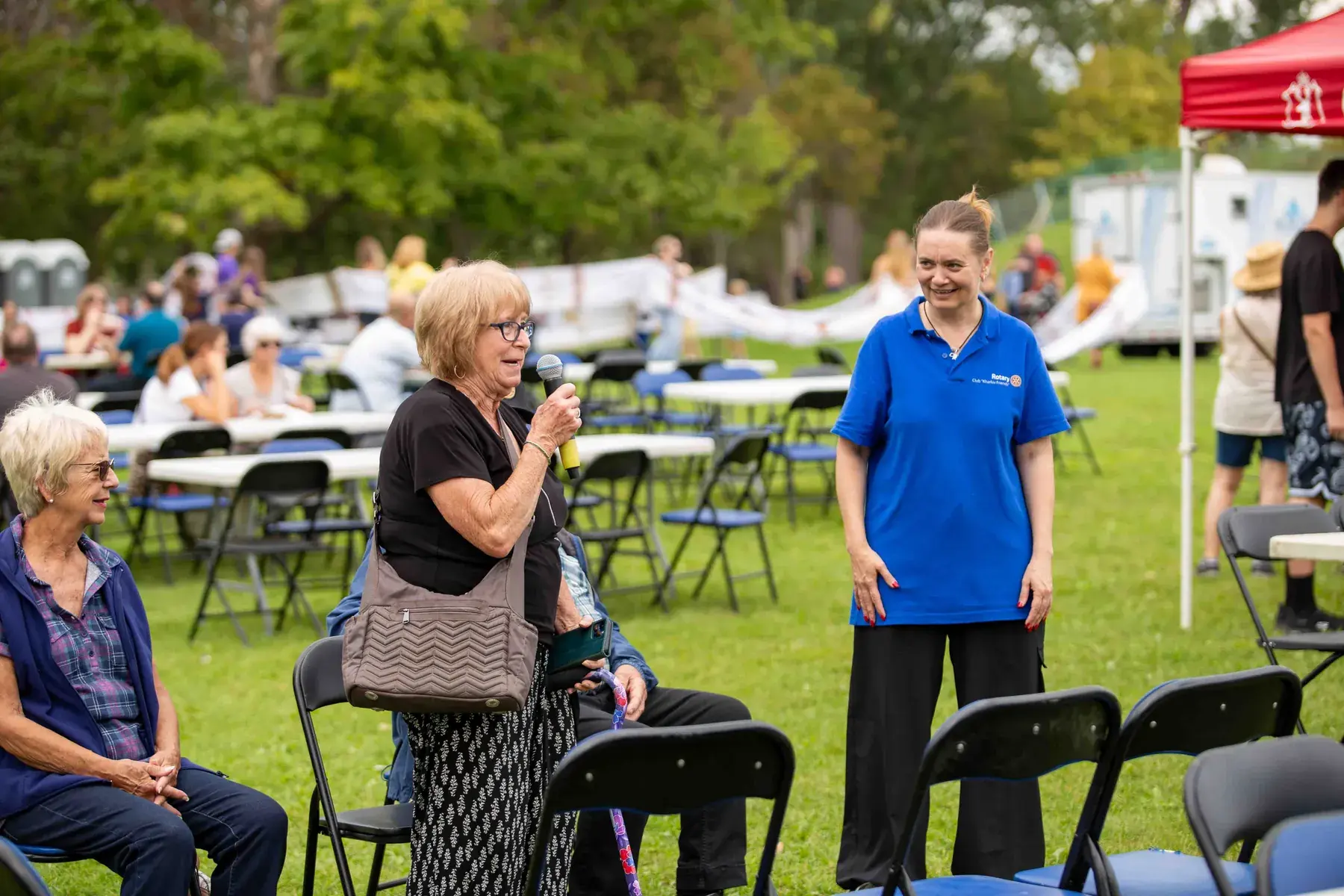
In the Ottawa region the community includes long-established parishes and organisations in the city, and a growing community in Lanark County to the west, where a garage sale organised in Carleton Place in 2023 to support Ukrainian families displaced by the war has since grown into UAFest - Ukrainian Festival near Ottawa.
Ukrainian Canadian life runs through a few kinds of places. Churches, Ukrainian Catholic and Orthodox, hold the holidays and much of the social calendar. Saturday schools and dance ensembles keep the language and the stage tradition going. Credit unions, community halls and national organisations such as the Ukrainian Canadian Congress hold the rest together.
And then there are the festivals, which bring all of it into one field for a day: the dance groups, the parish kitchens, the craft vendors, the newcomers and the families who have been here for five generations. The calendar of every Ukrainian festival in Canada is in our guide to Ukrainian festivals in Canada.
Canada recognised Ukraine's independence on 2 December 1991, among the very first countries to do so, and in 2008 Parliament recognised the Holodomor, the famine of 1932–33, as a genocide and set the fourth Saturday of November as its memorial day. Former Governor General Ray Hnatyshyn and astronaut Roberta Bondar are among the Ukrainian Canadians many people know by name.
More than 1.2 million Canadians reported Ukrainian origin in the 2021 census. Close to 300,000 more people arrived from Ukraine between March 2022 and March 2024 under CUAET.
In 1891, when Ivan Pylypiw and Wasyl Eleniak came from the village of Nebyliv. Thousands of settler families followed them to the Prairies before the First World War.
In Ontario, Alberta, British Columbia, Manitoba and Saskatchewan, with the largest communities in Toronto, Edmonton, Winnipeg, Calgary, Vancouver and Ottawa.
Canada was offering homestead land to settlers at the end of the 19th century, and the black soil and climate of the Prairies were familiar to farmers from western Ukraine.
At the parishes and community organisations in the city, at the Capital Ukrainian Festival in late August, and at UAFest - Ukrainian Festival near Ottawa in Carleton Place in September. UAFest 2027 is in September 2027; the waiting list at uafest.ca/2027 hears the days first.
Recipes, festival news and vendor calls — a few emails a year, no more.
By subscribing you consent to receive festival emails from the Ukrainian Community of Lanark County. Unsubscribe anytime.